
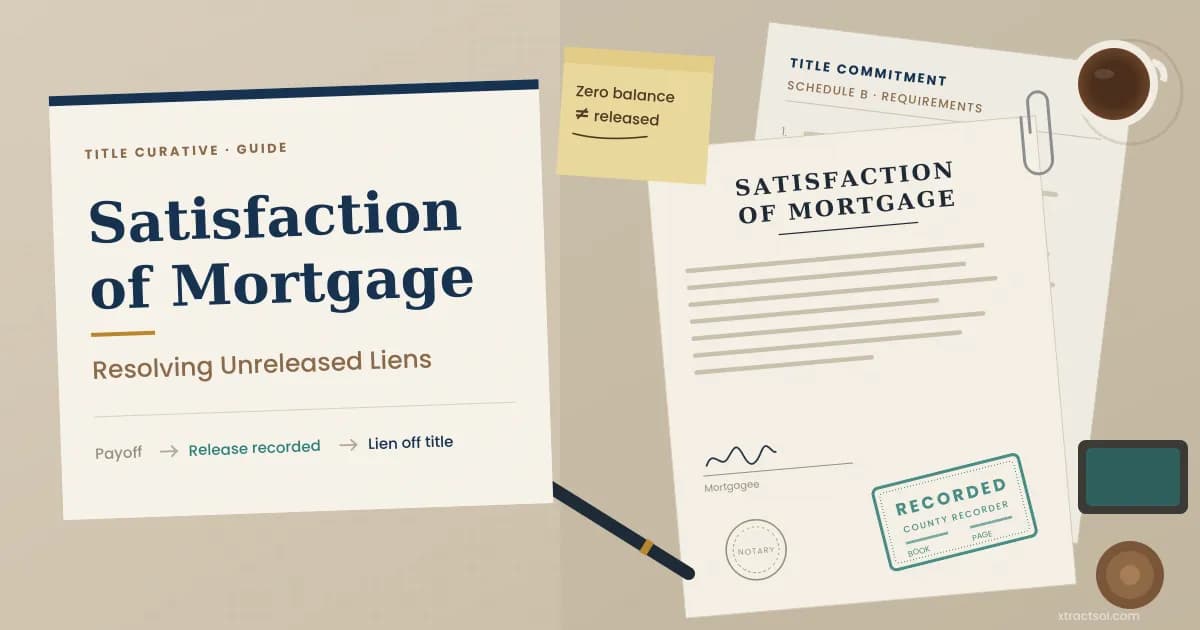
Satisfaction of Mortgage: Resolving Unreleased Liens
By Usama Muneer, Founder & CEO
• 6 min read
On This Page
A paid-off mortgage can still look open in county records, and that gap stalls sales, refinances, and title work. The missing document is the satisfaction of mortgage; without it, the lender's lien stays on the record. Title teams find the gap late, and the examiner has to chase a payoff that should already have been recorded. XtractSol Agents search county land, tax, and court records in one pass so examiners spot missing releases and spend their time on review instead of gathering. ALTA describes the industry's work as eliminating risk before insuring, which depends on a complete public record (ALTA).
Key Takeaways
- A satisfaction of mortgage is a recorded release, not a zero balance letter.
- State deadlines vary, and a missed release can leave a paid-off lien on title.
- The Agents gather county records in one pass; examiners review before closing.
What Is a Satisfaction of Mortgage?
A satisfaction of mortgage is a signed, recorded document that proves a mortgage debt is paid in full and releases the lender's lien from the property. Cornell Law School's Legal Information Institute agrees. After payoff, the servicer prepares the release and files it with the county recorder or clerk. Until then, the lien stays in the public record. A title search may show the mortgage as an open Schedule B requirement despite a zero balance letter. A payoff statement shows what is owed; a satisfaction of mortgage proves the debt is gone. The canceled promissory note does not replace the recorded release. To get a copy, search the county recorder's index after payoff or ask the servicer.
Why an Unrecorded Release Stalls Title Work
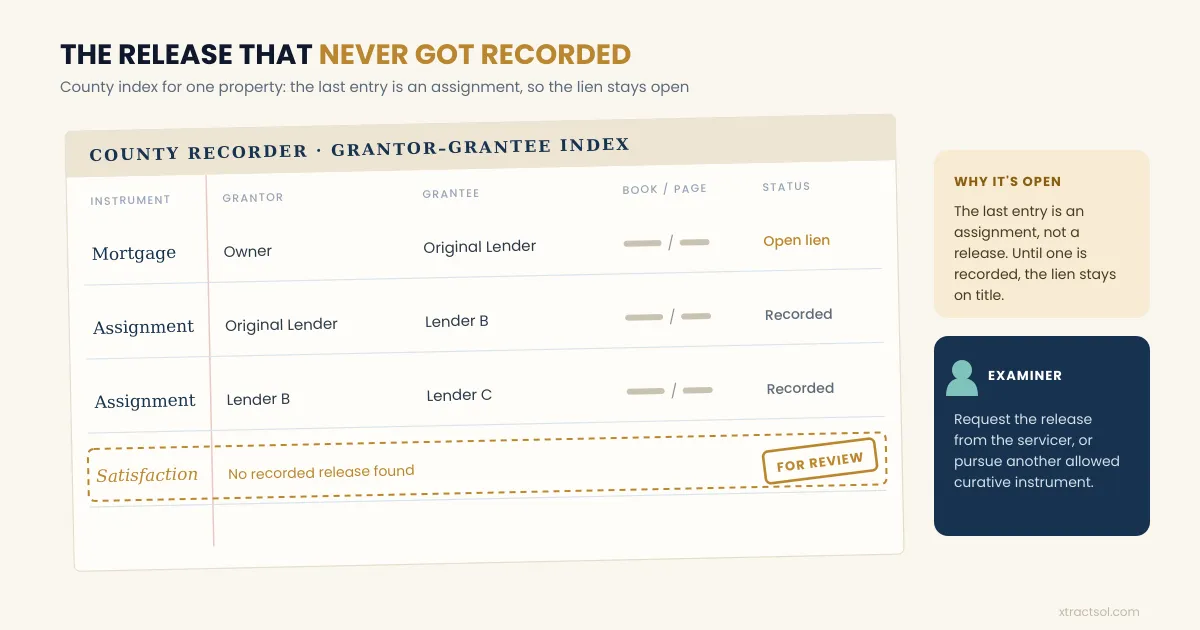
An unreleased mortgage lien is a title problem, not a bookkeeping error. Title is the ownership interest; the deed transfers it, and the chain of title records each transfer. A mortgage records search starts with the grantor-grantee index, where the examiner traces the mortgage, assignments, and any release. If the last entry is the mortgage or an assignment, the lien stays open.
Mortgages, assignments, and releases sit in the grantor-grantee index, or a tract index by legal description; judgment and general indexes cover court liens, probate, and tax liens.
State law sets the clock. California gives a mortgagee 30 days to record a certificate of discharge, and a trustee 21 days after receiving the request to record a reconveyance (California Civil Code § 2941). Deadlines vary by state, so check the statute for each county you search. Missed deadlines can bring damages or fees.
A zero balance letter is not a satisfaction of mortgage. It shows the servicer's balance, not the county record. Only a recorded release removes the lien. When a payoff is not released, the file needs curative work: trace assignments, request the release, or pursue another allowed instrument. Mortgage states use a satisfaction of mortgage; deed of trust states use a deed of reconveyance. In a few states, the Torrens system treats a court-issued certificate of title as conclusive proof of ownership.
How XtractSol Agents Support the Curative Workflow
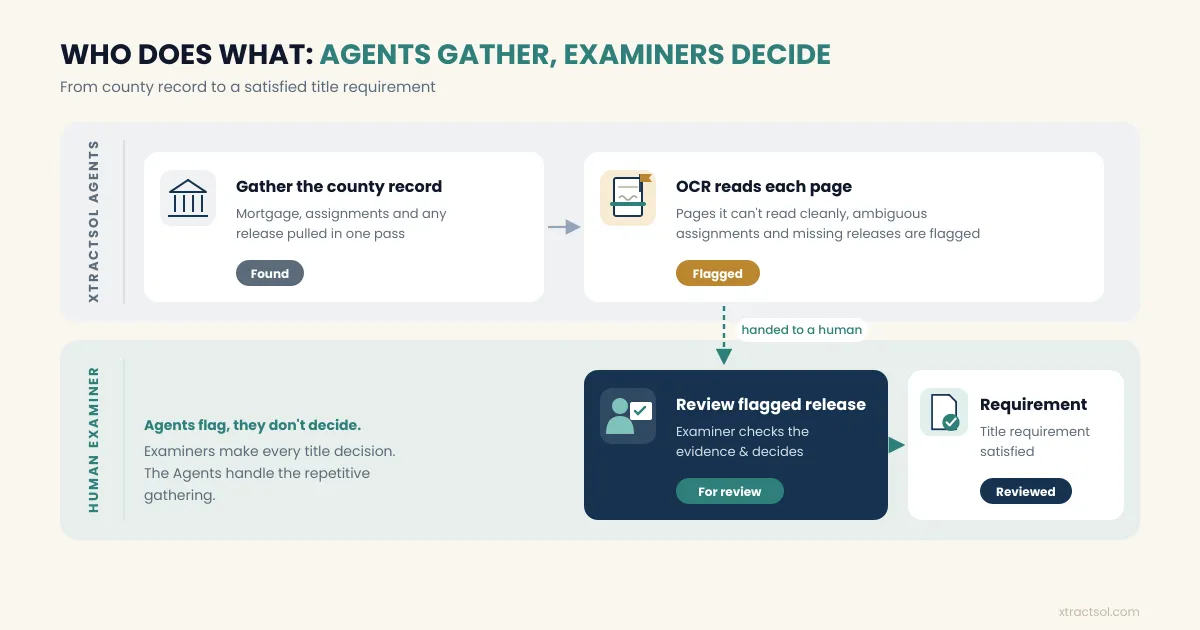
The Agents search county land, tax, and court records in one pass, giving examiners a cleaner starting point for release verification. The Agents support the file; they do not decide insurability.
1. Gather the county record
The Agents pull the mortgage, assignments, and any release from the county indexes in one pass. OCR reads the recorded documents, and pages it cannot read cleanly are flagged for the examiner.
2. Match the payoff to the recording
The examiner compares the payoff data to the county index. A missing satisfaction or reconveyance stands out instead of hiding in a servicer email.
3. Flag what needs review
Unreadable pages, ambiguous assignments, and missing releases are flagged, not decided. The examiner reviews the evidence and determines what the title commitment requires.
4. Keep the human decision
Examiners make every title decision. The Agents handle the repetitive gathering and return the search in hours, not days.
This matters most when the payoff is old. A zero balance letter may be in the file, but the county index still shows the mortgage. The examiner needs the recorded satisfaction, or a curative path. The gathered record shows the open lien and its documents, which shortens the servicer back-and-forth. For the broader process, see our title curative work guide. Teams that track assignments end to end can see where a release should have appeared; our mortgage assignment tracking case study shows the record trail.
Implementation & Operational Considerations
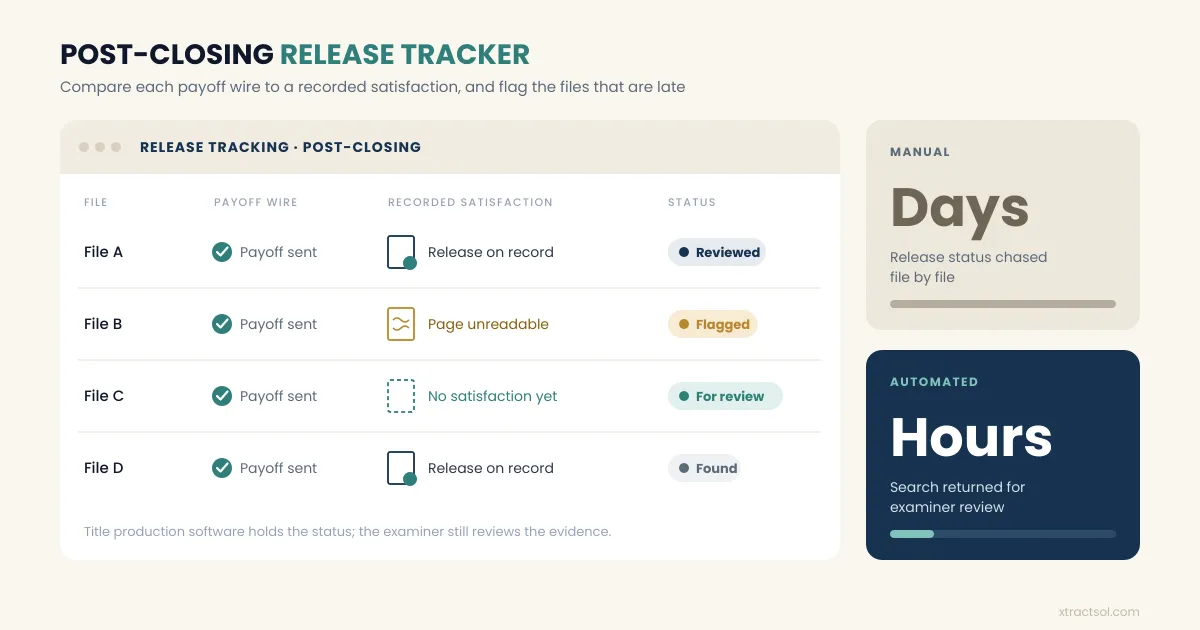
Start with the counties you search. Confirm whether each recorder offers online indexes and document images, or only in-person access. Older assignments may be handwritten or poorly scanned. Build a release-tracking step into post-closing: compare each payoff wire to a recorded satisfaction, and flag any file where the recording is late. Title production software can hold that status, but the examiner still reviews the evidence. Keep the names straight: satisfaction of mortgage in mortgage states, deed of reconveyance in deed of trust states. Check the county's indexing practice too. Our curative exception management automation covers the handoff to examiner review.
Conclusion
A paid-off mortgage is not a closed file until the satisfaction of mortgage is fully recorded. The gap between payoff and recording is where title work often slows down, especially when the servicer has changed or the lender is gone. A defined process, a county check, and a human examiner keep that gap from delaying a closing date. The Agents support that process by gathering county records in one pass, while examiners keep the title decisions.
See where AI fits in your title workflow.
Book a free 30-minute workflow review. Book a Free 30-Minute Workflow Review
Frequently Asked Questions
The deadline depends on state law. California allows 30 days after satisfaction. Deadlines vary by state, so check the statute for each county you search. A missed deadline can trigger statutory damages or attorney fees.
A payoff statement shows the amount needed to pay off the loan on a set date. A satisfaction of mortgage is the recorded document that releases the lien after payment.
Request the release and recording details from the servicer, then search the county index. If no release exists, pursue a recorded release, affidavit, or other curative instrument allowed by state law.
About the Author
Usama Muneer, Founder & CEO
Usama leads XtractSol's work building AI agents for title and escrow operations.
XtractSol Agents prepare the search package from public records; examiners make every title decision.
See where AI fits in your title workflow.
Stay Updated
Get the latest insights on AI and automation delivered to your inbox.
On This Page
See where AI fits in your title workflow.
Stay Updated
Get the latest insights on AI and automation delivered to your inbox.
More posts
Product notes, how we build, and what we are learning.

Title Search
What is a judgement lien? A 2026 Guide for Title Teams
What is a judgement lien, and how does it block a closing? Learn how liens attach, how long they last, and how title teams clear them before closing.
Read more
Title Search
Assignment of Mortgage: What Title Teams Need to Know
What is an assignment of mortgage? Learn what it transfers, how MERS and county recording affect the chain of assignments, and how title teams cure gaps.
Read more
Title Search
How to Find a Lien on a Property | Title Team Guide
Learn how to find a lien on a property by searching county land, tax, court, and municipal records, then verifying releases before closing for title teams.
Read more
Ready to get started?
30 minutes. We walk one of your files from order to closing and send a one-page note on the 2-3 steps worth automating first.