
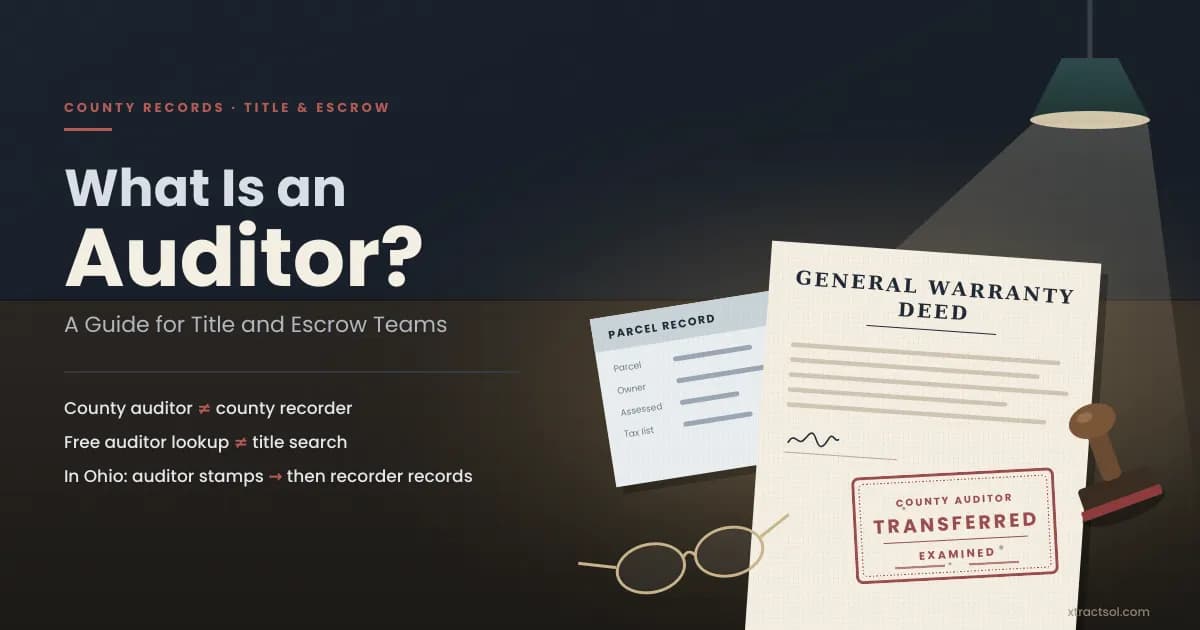
What Is an Auditor? A Guide for Title and Escrow Teams
By Usama Muneer, Founder & CEO
• 7 min read
An auditor examines records and reports on their accuracy. In a real estate file, the word can mean a county fiscal officer or an independent financial auditor, and county office duties vary by state and county.
A title team that treats the county auditor like the recorder, or treats a free property lookup as a title search, adds real rework at the next handoff. XtractSol Agents prepare the title search package, every finding linked to the recorded document, for qualified examiner review. ALTA's 2025 title production survey found that 27% of title professionals must obtain documents in person (ALTA) so knowing which office holds which record saves time.
Key Takeaways
- An auditor can mean a county fiscal officer or an independent financial auditor.
- Office duties and deed-recording steps vary by state and county.
- In Ohio, the auditor stamps and endorses a deed before recording.
- A free auditor lookup is not a title search.
What Does an Auditor Do in a Real Estate File?
The answer depends on the office. A county auditor works inside county government, and the office's duties vary by state and county. An independent auditor reviews financial statements for an opinion.
Auditor vs. Independent Auditor
County auditor duties vary by state and county. The office may handle the tax list, transfer review, or deed stamp, depending on the state. Where a county has a separate assessor, that office handles valuation. An independent auditor does not touch the tax list or the deed.
Title, Deed, and Chain of Title
Three ideas stay separate. Title is the legal ownership interest. A deed is the instrument that transfers that interest. Chain of title is the historical record of those transfers. Where land is registered under a Torrens system, the county issues a certificate that is generally conclusive evidence of ownership, subject to limited statutory exceptions, and does not replace title insurance.
Which Office Holds Which Record?
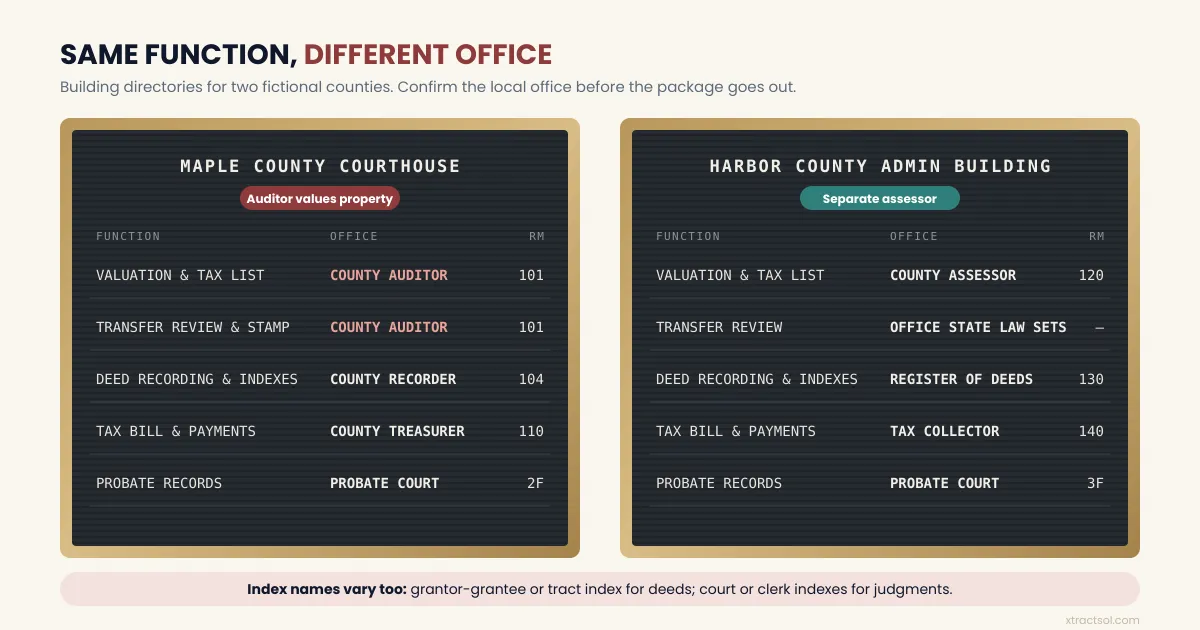
The office that holds each record varies by state and county. The table shows the functions and possible offices.
| Function | Office that may hold it | What to confirm |
|---|---|---|
| Property valuation and tax list | County auditor (or county assessor where the county elects one) | Who sets assessed value |
| Deed recording and indexes | County recorder (or clerk or register of deeds where state law assigns recording) | Which deed index applies |
| Tax bill and payment status | County treasurer (or tax collector where the county elects one) | Who collects current taxes |
| Probate records | Probate court | Which court holds the file |
| Transfer review and auditor's stamp | County auditor (or the office state law designates) | Whether review precedes recording |
Index names also vary by county. Deeds and mortgages may sit in a grantor-grantee or tract index. Judgments may sit in court or clerk indexes. Tax liens may appear on the treasurer's or tax collector's records; tax lien notices may sit in the recorder's indexes. Probate records sit with the probate court. Some counties keep a general index too.
Why Does a Deed Need an Auditor's Stamp Before Recording?
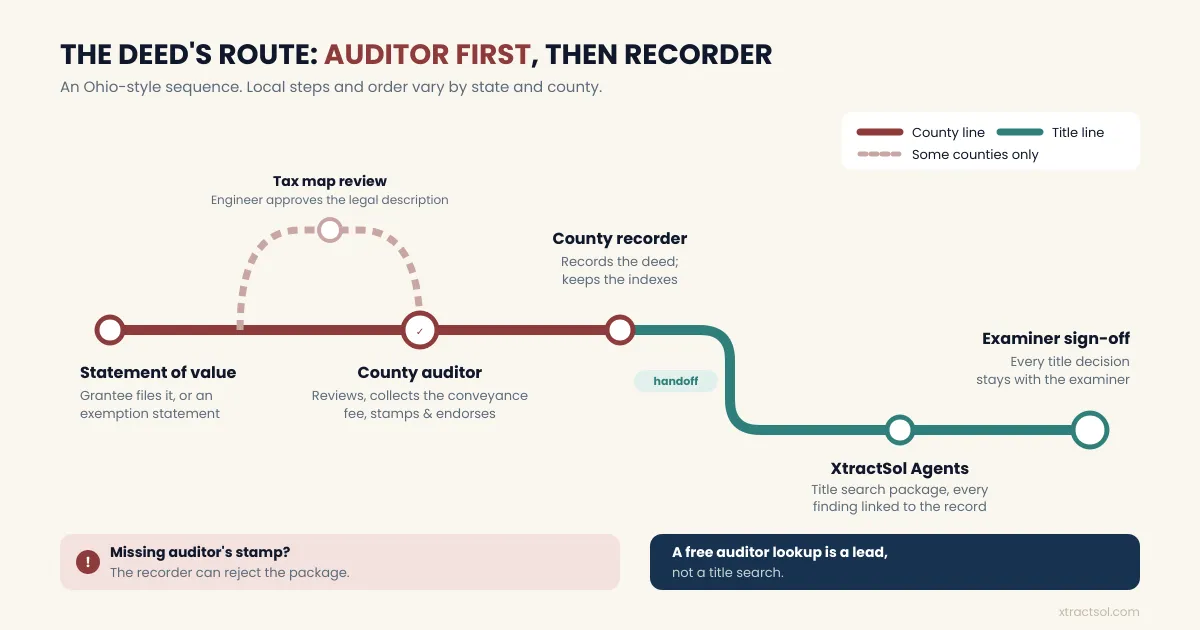
In Ohio, the county recorder cannot record a deed of absolute conveyance until the county auditor stamps it as examined and endorses it as transferred under Ohio law. The Stark County Auditor's page states the same rule under Ohio Revised Code § 319.20 and § 319.202.
The Ohio Sequence
The grantee or the grantee's representative submits a statement of value or an exemption statement. The auditor reviews the conveyance, collects the conveyance fee, and stamps the deed. The recorder records it. A missing auditor's stamp can lead the recorder to reject the package.
Parcel Splits and Legal Description Review
A parcel split or combination can change the parcel number and the tax map. Some Ohio counties send the deed through the county engineer's tax map office first. Lucas County requires its Engineer’s Tax Map Department to approve the deed’s legal description before the deed goes to the Auditor’s Office (Lucas County Auditor).
A Free Lookup Is Not a Title Search
A free auditor lookup or GIS parcel viewer can show the owner, parcel number, assessed value, and tax status. It may not show the chain of title, unreleased liens, easements, or probate matters. Recording offices generally do not verify validity; confirm local practice, and a recorded deed is notice, not proof of ownership (Cornell LII). A public summary is not a title search.
How Do Title Teams Reduce Auditor and Recording Rework?
The records behind a deed slow the file. The same ALTA survey that reported the 27% in-person figure found that 82% of purchase transactions require review of 11 or more documents. Gathering those records by hand takes examiner time.
XtractSol Agents prepare the title search package, every finding linked to the recorded document. XtractSol Agents pull deeds, mortgages, releases, and related instruments into one review set. County coverage varies, so the examiner confirms the right documents came back. Each finding points back to the source image, so the examiner can check the parcel, the legal description, and the chain of title.
The examiner makes every title decision. XtractSol Agents do not verify ownership, cure title defects, or decide insurability. A qualified examiner reviews the package and satisfies or removes commitment requirements.
For a closer look at the document side, see our deed processing guide and our deed and mortgage matching case study. Both show how the records fit together before the examiner reviews them.
Implementation & Operational Considerations
Map the offices that touch the file in each county: auditor, recorder, assessor, treasurer, and any tax map or engineer review. Confirm the document list and the local order before the package goes out. Count the record types: deeds, mortgages, releases, easements, judgments, probate, and tax records. Give parcel splits and combinations a separate review step. The package should land where the examiner works.
Conclusion
An auditor is not one role. A county auditor is a fiscal officer whose duties vary by state and county; an independent auditor reviews financial statements for an opinion. In Ohio, the county auditor stamps and endorses a deed before the county recorder can accept it, and some counties add a tax map review first. Confirm the local order, prepare the right records, and treat a free lookup as a lead. XtractSol Agents prepare the title search package, every finding linked to the recorded document, and examiners make every title decision.
See where AI fits in your title workflow.
Book a free 30-minute workflow review.
Book a Free 30-Minute Workflow Review
Frequently Asked Questions
In Ohio, the county recorder cannot record a deed of absolute conveyance until the county auditor stamps and endorses it under Ohio law. Local steps vary by county and office.
The county auditor handles the tax list, transfer review, and stamp in Ohio. The county recorder records the deed and keeps the indexes. Office duties vary by state and county.
In Ohio, the deed is signed and acknowledged and has a legal description. The grantee also files a statement of value (DTE Form 100) or an exemption statement (DTE Form 100 EX), and the auditor stamps the deed before it is recorded. Local rules vary by county
About the Author
Usama Muneer, Founder & CEO, XtractSol. Usama writes about title search operations, public records, and practical automation for title and escrow teams.
XtractSol Agents prepare the search package from public records; examiners make every title decision.
See where AI fits in your title workflow.
Stay Updated
Get the latest insights on AI and automation delivered to your inbox.
See where AI fits in your title workflow.
Stay Updated
Get the latest insights on AI and automation delivered to your inbox.
More posts
Product notes, how we build, and what we are learning.
Title Search
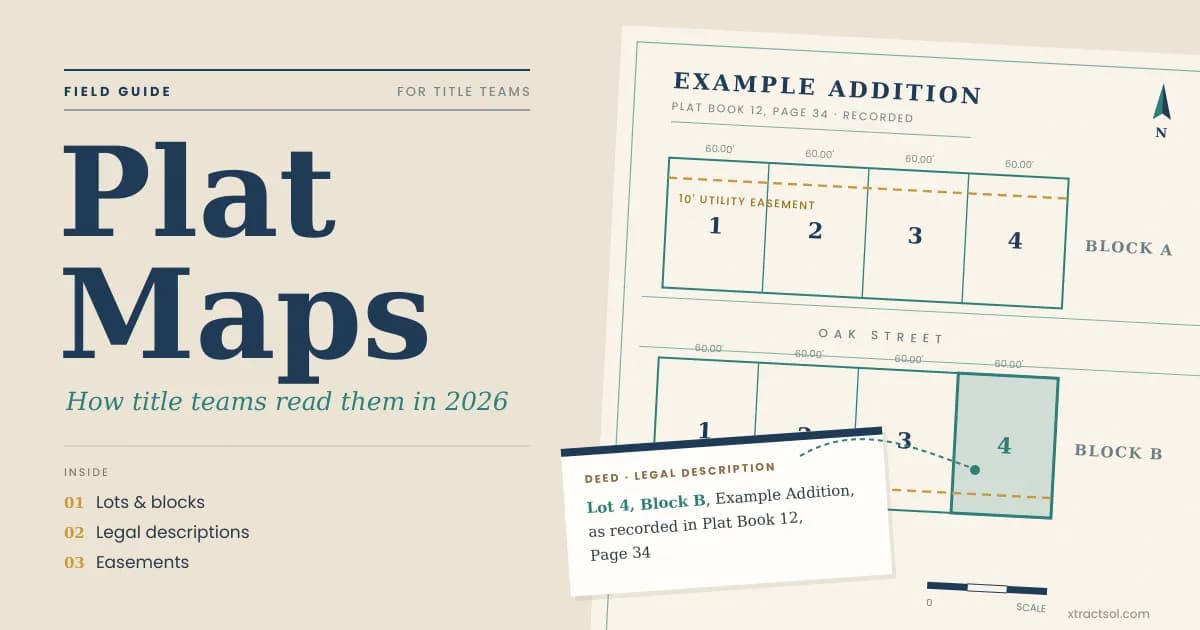
Plat Maps Explained: A Guide for Title Teams (2026)
Learn how plat maps define lots, blocks, and easements, and how title teams use recorded plats to support more accurate property searches and commitments.
Read more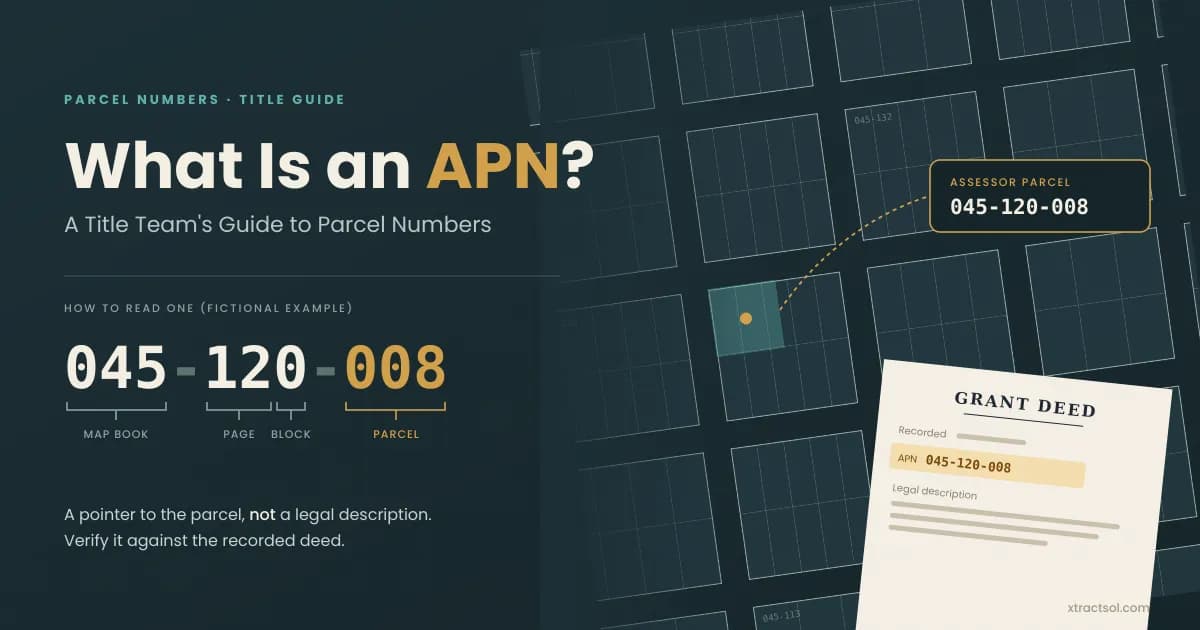
Title Search
What Is an APN? A Guide to Assessor Parcel Numbers
Learn what is an APN is, how title teams find an assessor parcel number by address, and why splits, mergers, and county formats can change a property search.
Read more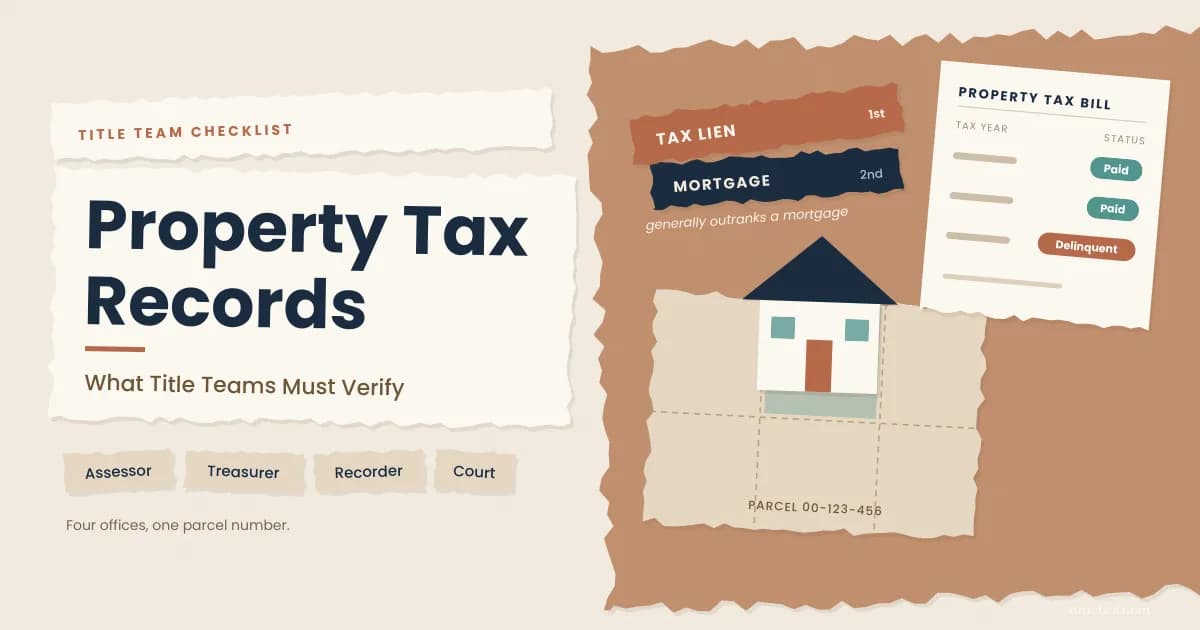
Title Search
Property Tax Records: What Title Teams Must Verify
Learn how property tax records work for title teams, from assessor and treasurer searches to delinquent tax liens, assessed value, and closing prorations.
Read more
Ready to get started?
30 minutes. You walk us through how one file moves from order to closing, and we send a one-page note on the 2-3 steps worth automating first. Nothing to send us.