
Property Management AI: Smart Automation for Real Estate Operations
By Usama Muneer, Founder & CEO
• 7 min read • Updated
Property management AI is software that uses machine learning and language tools to help with leasing, maintenance, rent, and tenant messages. Property teams run these jobs in separate tools, so staff retype the same details again and again. Rules apply too. Under 42 U.S.C. § 3604, it is unlawful to refuse to rent, or to treat renters differently, because of a protected trait. The safe path is to start with one workflow, keep a person in charge of every decision about a tenant, and check each tool before you use it. XtractSol Agents prepare the search package from public records, and the examiner reviews it.
Key Takeaways
- Property management AI helps with sorting, drafting, and data entry, while people make the decisions.
- Tenant screening is the highest-risk use, because fair housing and credit-report rules apply.
- Pick one workflow first, such as maintenance requests or lease data, and test it on real files.
- Ask every vendor how each result links back to its source document.
Which Property Management Workflows Can AI Help With?
Start where your team spends the most effort. Four areas come up most often.
Leasing and screening
AI can sort rental applications and sum up the details for a person to review. The final decision stays with a staff member. The next section explains why.
Maintenance and buildings
AI can sort incoming requests by type and urgency and send each one to the right vendor. With sensor data and past service records, it can help spot equipment that may need repair. Some teams also use it to adjust energy settings. Staff stay in charge of vendor choice and repair approval.
Rent and tenant messages
AI can draft rent reminders and answer common tenant questions by chat. Our chatbot guide explains why a chatbot works best with a written scope and a handoff to a person. Our post on CRM and virtual assistant integration covers follow-ups and scheduling. Always give tenants a way to reach a person.
Leases and documents
AI can read a lease and pull out dates, rent amounts, and key clauses into a set format. Our guide to document process automation explains which document workflows to automate first. Our post on automated contract analysis shows how AI extracts key terms from contracts.
What Rules Apply When AI Helps Screen Tenants?
Screening is where mistakes matter most. Fair housing law applies no matter who or what makes the call. Section 3604 bars refusing to rent, or treating renters differently, because of a protected trait such as race, color, religion, sex, familial status, or national origin. A tool that scores applicants can still produce an unfair result. A person should review every denial. Written screening rules help too. State which records you check, and apply the same rules to every applicant.
Credit data adds a second rule. Under 15 U.S.C. § 1681m, if you take adverse action based even partly on a consumer report, you must tell the applicant and name the agency that supplied the report. You must also explain the right to a free copy of the report and the right to dispute errors.
So ask each vendor how a result can be traced and shown to a staff member. Keep a written record of who made the final call. This is general information, not legal advice. Ask your attorney about your state and local rules.
How Does Manual Work Compare With AI Help?
The table shows what changes, and what does not.
| Task | Manual work | With AI help |
|---|---|---|
| Lease abstraction | Staff read each lease and type the terms | AI drafts the terms for staff to check |
| Maintenance requests | Staff read and route each request | AI sorts and routes, staff handle exceptions |
| Rent reminders | Staff send them by hand | AI drafts and sends set reminders |
| Tenant questions | Phone and email | Chat for common questions, handoff to staff |
| Records and reports | Built by hand from several tools | Pulled from one place, with source links |
| Decisions about tenants | Staff | Staff |
The last row stays the same on purpose. People make every decision about a tenant.
Source links matter for trust. Our case study on defensible AI extraction describes keeping the source document and search context next to the extracted data, so a decision can be traced back to its origin.
How Do You Choose and Start With AI Tools?
Check six things before you buy. The tool should connect with your property management system, such as Yardi, MRI, or AppFolio, so staff do not enter data twice. It should cover the workflow that hurts most. Each result should link to its source. Settings should be easy to change. Ask who owns the data, who can see it, and how the vendor tests changes before they go live. Training and support should be included. If you need in-house automation, check whether it offers an API.
Then start small. Pick one workflow and write down how it runs today, including task times and error counts. Choose a tool that connects to your system. Train staff and explain what the tool will and will not do. Run a small batch, review every exception, and fix the rules. Expand only when staff are comfortable and the results hold up.
Implementation & Operational Considerations
Your operations lead picks one workflow to start, such as maintenance requests or lease data. The team lists the systems and documents that workflow touches. An owner is named for each step. A small batch of real files goes through first. The team reviews every exception, writes down what the tool missed, and adjusts the rules before adding more files. Each change is recorded with the name of the person who approved it. Keep a short list of cases that always go to a person, such as denials, disputes, and legal notices.
XtractSol's real estate workflow automation service adds an AI agent layer on top of the software teams already use, routes approvals to the right person, and starts with one workflow.
XtractSol Agents prepare the title search package, every finding linked to the recorded document. The examiner confirms the right documents came back. Examiners make every title decision.
Conclusion
Property management AI works best as a helper for routine work. Start with one workflow, keep people in charge of decisions about tenants, and make every result traceable. As a next step, list the three tasks your staff repeat most and pick one to test on real files.
See where AI fits in your title workflow.
Book a Free 30-Minute Workflow Review
Frequently Asked Questions
It cuts down on routine sorting and typing, so staff can spend more time on tenants and hard cases. That gives people back time for work that needs judgment.
No. AI helps with sorting, drafting, and reminders. People make decisions about tenants and handle hard cases.
Yes. Fair housing and credit-report rules apply to screening. Keep a person in the loop and keep records of who decided. Also ask each vendor how it protects applicant data.
Yes. Tools exist for both, but features and system connections differ, so test with your own files.
About the Author
Usama Muneer, Founder & CEO, XtractSol. Usama writes about title search operations, public records, and practical automation for title and escrow teams.
XtractSol Agents prepare the search package from public records; examiners make every title decision.
See where AI fits in your title workflow.
Stay Updated
Get the latest insights on AI and automation delivered to your inbox.
See where AI fits in your title workflow.
Stay Updated
Get the latest insights on AI and automation delivered to your inbox.
More posts
Product notes, how we build, and what we are learning.
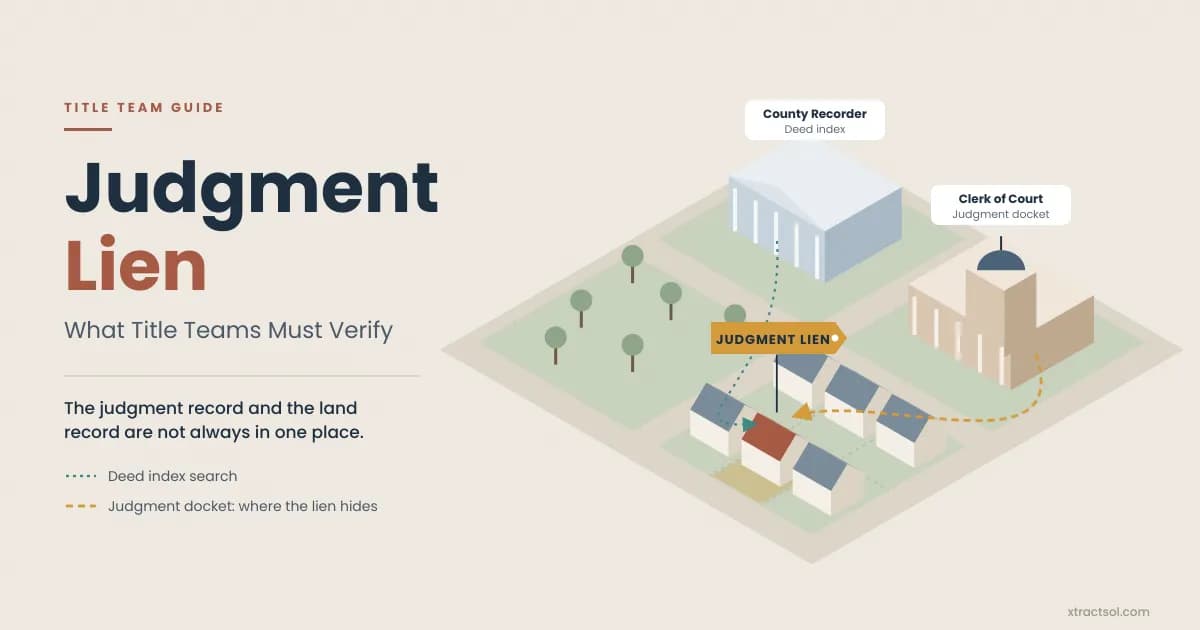
General
Judgment Lien on Real Property: A Title Team Guide
Learn how a judgment lien attaches to real property, how state recording rules and duration work, and how title teams find and resolve liens before closing.
Read more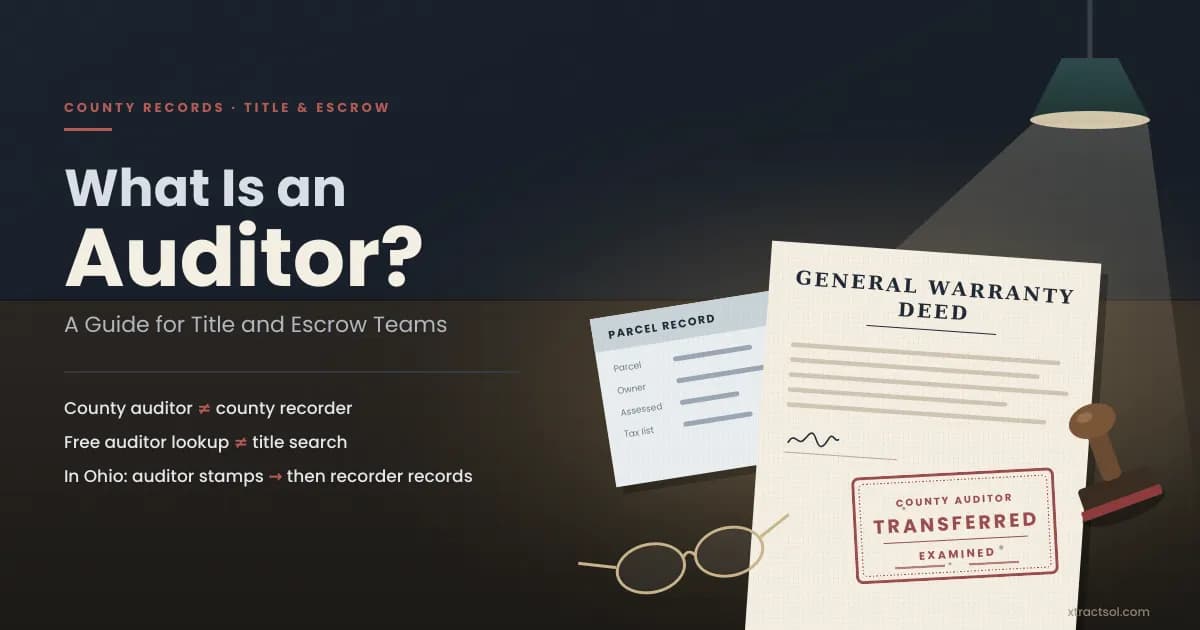
Title Search
What Is an Auditor? A Guide for Title and Escrow Teams
Learn what an auditor is in real estate, how county auditor and recorder duties vary by state and county, and which records a deed needs before recording.
Read more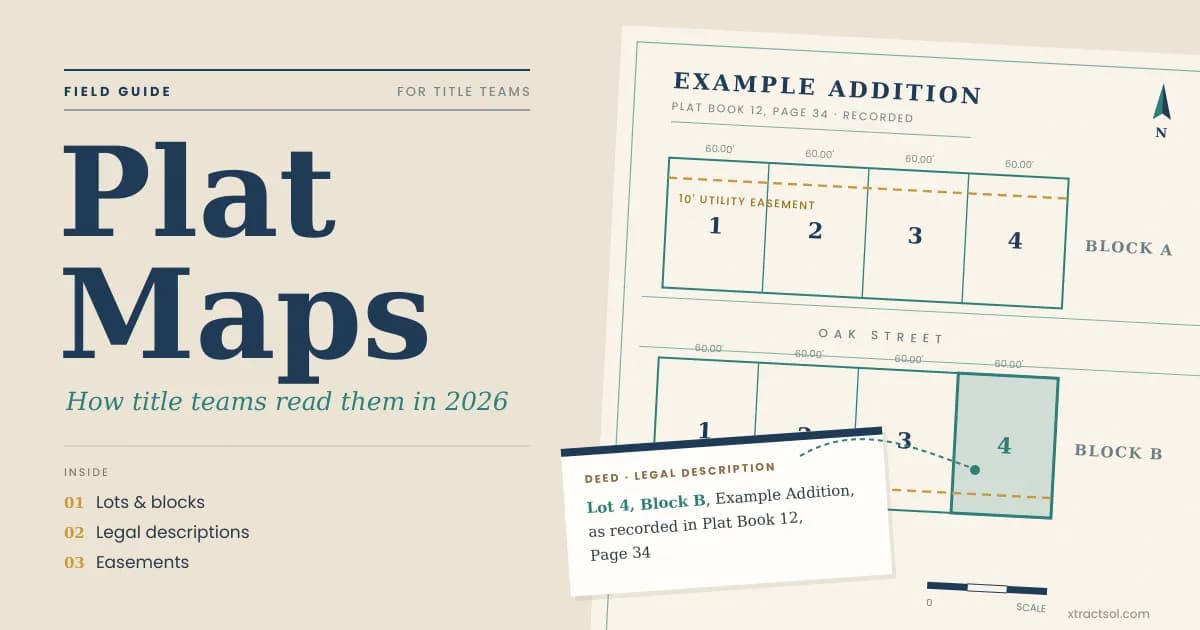
Title Search
Plat Maps Explained: A Guide for Title Teams (2026)
Learn how plat maps define lots, blocks, and easements, and how title teams use recorded plats to support more accurate property searches and commitments.
Read more
Ready to get started?
30 minutes. You walk us through how one file moves from order to closing, and we send a one-page note on the 2-3 steps worth automating first. Nothing to send us.